


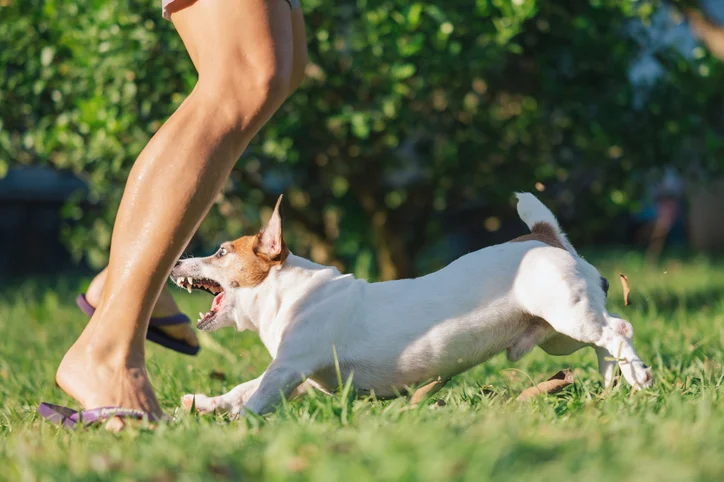
Austinites love their dogs, and the city's extensive network of parks, hike-and-bike trails, and off-leash areas reflects that. Places like Zilker Park, the Barton Creek Greenbelt, Bull Creek District Park, and the Lady Bird Lake Trail attract thousands of dog owners and pedestrians every week, especially during the summer months. When those interactions go wrong, and a dog attacks another person, the consequences can be serious, and the legal path forward is not always obvious.
This guide explains how Texas law handles dog bite claims, what Austin victims need to know before pursuing compensation, and why prompt action matters.
How Common Are Dog Bites in Austin?
Dog bites are more common than many people realize. According to the American Veterinary Medical Association, approximately 4.5 million dog bites occur in the United States each year, and around 800,000 require medical attention. Children are disproportionately affected, accounting for a significant share of serious bite injuries. Summer, when outdoor activity peaks and dogs and people spend more time together in shared public spaces, is consistently associated with higher bite rates.
Texas Law and Dog Bite Liability
The 'One Bite' Rule
Texas follows what is commonly referred to as the 'one bite rule,' though the name is somewhat misleading. Under this doctrine, a dog owner can be held liable for a bite injury if the owner knew or should have known that the dog had a propensity for aggression. This knowledge can be established by showing that the dog has bitten or attempted to bite someone in the past, has exhibited threatening behavior such as lunging or snapping, or has been previously identified as dangerous.
Negligence as an Alternative Theory
Even if a dog has no prior history of aggression, a victim may still recover compensation by proving that the owner acted negligently. For example, allowing a dog to run off-leash in a designated leash-required area, failing to maintain control of a dog that is known to be excitable, or leaving a dog unsupervised in a public space could all constitute negligence that gives rise to legal liability.
Austin's Leash Laws
Austin's city ordinances require dogs to be kept on a leash no longer than six feet when in public spaces that are not designated off-leash areas. A violation of this ordinance at the time of a bite can be powerful evidence of the owner's negligence. Even in designated off-leash areas, owners are required to maintain voice control over their animals, and failure to do so can still support a claim if a bite results.
Injuries Caused by Dog Bites
Dog bites can cause a wide range of injuries, some of which require extensive medical treatment and leave permanent effects:
- Deep lacerations and puncture wounds requiring suturing or surgery
- Nerve damage affecting sensation or function in the affected area
- Infection, including serious bacterial infections such as cellulitis or sepsis
- Scarring and disfigurement, particularly on the face and hands
- Broken bones from a dog knocking a person down during an attack
- Emotional trauma, including post-traumatic stress disorder
Children are especially vulnerable because attacks often target the face and neck, and smaller bodies are less able to withstand the force of a large dog. If a child was injured in a dog attack at an Austin park or trail, the legal considerations can be somewhat different, and prompt consultation with an attorney is particularly important.
What to Do After a Dog Bite in Austin
The actions taken in the immediate aftermath of a dog bite can significantly affect both your medical outcome and the strength of your legal claim.
- Seek medical attention promptly, even for wounds that appear minor, as dog bites carry a significant infection risk
- Report the incident to Austin Animal Services, which investigates bite reports and maintains records that may be valuable in your case
- Document your injuries with photographs before and after treatment
- Obtain the dog owner's name, contact information, and proof of rabies vaccination
- Identify and preserve contact information for any witnesses
- Do not accept any payment or sign any documents from the dog owner or their insurance company before consulting with an attorney
Medical documentation is especially important in dog bite cases. A clear record linking your injuries to the attack, including emergency room records, follow-up treatment notes, and any referrals for infection management or surgery, helps establish the full extent of your damages.
Compensation Available to Dog Bite Victims in Texas
Victims of dog bites in Texas may be entitled to compensation for a range of economic and non-economic losses, including:
- Emergency medical treatment and any follow-up care or surgery
- Reconstructive procedures for scarring or disfigurement
- Lost income during recovery
- Pain and suffering
- Emotional distress
- Future medical costs if the injury results in lasting effects
How Briggle & Polan Help Dog Bite Victims in Austin
Briggle & Polan, PLLC represents individuals and families who have been injured in dog attacks throughout the Austin area. Whether the attack happened on the Barton Creek Greenbelt, at a neighborhood park, or in a residential setting, our dog bite attorneys know how to build a compelling case under Texas law. We also handle cases where the attack happened on someone else's property, connecting the bite claim to a broader premises liability argument when appropriate. When children are involved, we draw on our experience with child injury cases to ensure that the full, long-term impact of the injury is reflected in the claim.
Call Briggle & Polan, PLLC today at (512) 400-3278 for a free, no-obligation consultation. We handle dog bite cases on a contingency fee basis, meaning you owe us nothing unless we recover compensation for you.

.2312110658550.jpg)


